

The Day and After — Remembering 9/11 and its aftermath 25 years later.
By Nicolas Rossier
The sky was so blue and crisp that day. I went downtown to my office south of Canal Street. Just when I exited the subway around 8:30 am, my wife called me. As we ended our short conversation, she told me: “Kiss the sky; it’s a beautiful day.” A second later, a frightened man rushed down and yelled at me. Did you hear? A plane smashed into the Twin Towers. I shrugged, not understanding what it meant, and went to the gym. As I noticed all the TV screens showing the crash incident on a loop, I suddenly realized I was the only one in the gym. I left, went to my office at 368 Broadway, grabbed my camera, and headed down Broadway. I began walking toward the towers. Before I could get any closer, a federal agent shouted at the crowd to move back. His voice was urgent. I hesitated for a few seconds, then turned back. I felt conflicted. Part of me wanted to record what was happening, but another part of me felt like a voyeur. People rushed north while first responders sped south. A few minutes later, the phone rang. It was my father, watching the horror unfold on television. He asked if I was safe. I told him I was. While we talked, I heard that a tower had collapsed.

I went back to the roof, and another tower had come down. The sound rolled through the city like nothing I had ever heard, a mixture of thunder and reeking stone, followed by silence that seemed to swallow everything. I rushed into the streets. Out of the dense gray smoke, people emerged like ghosts, their faces blank and clothes covered with grey dust. Some were speeding away, rushing from danger, but most walked slowly and aimlessly. An eerie quiet hung in the air, broken only by the crowd’s coughing and ambulance sirens. Looking back, I believe that the FBI agent who shouted at me to turn back was there at the right moment. I could easily have taken another path, slipped down a side street toward the towers. Many who had tried to go down at the same time never returned. That one agent’s command saved my life.


That night, they sealed off the entire area south of Canal Street. State troopers had set up checkpoints everywhere. The entire area was a dead war zone. But I was anxious about my computer and personal belongings still in the office. I eventually found a hidden dark alleyway next to a Chinese fish market that wasn’t guarded. The streets were lined with smashed and overturned vehicles. A terrible stench of burnt plastic hung in the air, and within ten minutes of retrieving my things, my eyes became red from the acid. I hurried, gathering only what I needed, and went back home as quickly as I could. My wife-to-be’s life was spared too. Had she not changed her job shortly before September 11th, she would have attended a meeting on the 65th floor of the North Tower where all in attendance perished. Life is very mysterious sometimes. Why were she and I spared that day? I struggled with what I carried from those days and felt ashamed even for wanting to film anything that day. I was there, just a few blocks away, close enough to see and far enough to feel helpless.
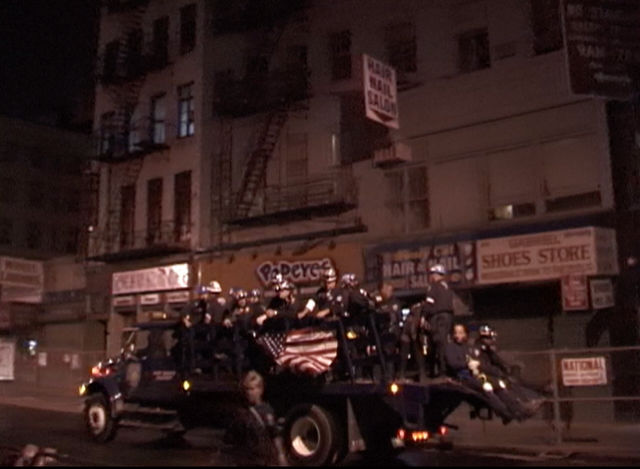
For days and weeks, I filmed people gathering in different areas of NYC. They showed up to mourn, but also to protest against hate and our going to war. The screenshots above are from shots I took with my 1998 Sony MiniDV camera. I interviewed ordinary New Yorkers who felt compelled to share what they felt. I remember that for a few months, New Yorkers felt united, bound by grief and resilience. The New York brashness and impatience were gone. I will release a short video essay soon.

25 years after, what have we really learned? Are we kinder and more tolerant with our neighbors? Islamophobia is more rampant than ever despite the election of our first Muslim mayor. Antisemitism is growing among Americans who seem to voluntarily confuse the actions of the Israeli government with Jews around the world. We need to do better and elect leaders who don’t use tragedies to foment new ones. I want to quote Michael Massaroli Jr., whose family was not spared that day. He lost his father in one of the towers. He spoke very movingly during the memorial on Friday. “You do my dad’s legacy and the legacy of all these victims no honor by using this tragedy to spread hate. I’ve had to grow up and spend the past 25 years seeing people use it to hate on our Muslim brothers and sisters, to hate on people who don’t look like them.” The cycle of hate needs to be stopped, or hate will continue to nourish itself and multiply until we tear ourselves apart. Our world faces two very serious challenges (AI and global warming) that we can only face by working together. But there is still hope. The younger generation does not let itself be divided that easily. Mamdani’s election in New York proved it.

Disclaimer: I never showed that footage until now. For 25 years, it sat untouched, too heavy to watch. I committed to not using any AI or Editing software to improve the quality of these digital tapes. I published this for the historical record.


Comments